1919 POLO | Attorneys at Law
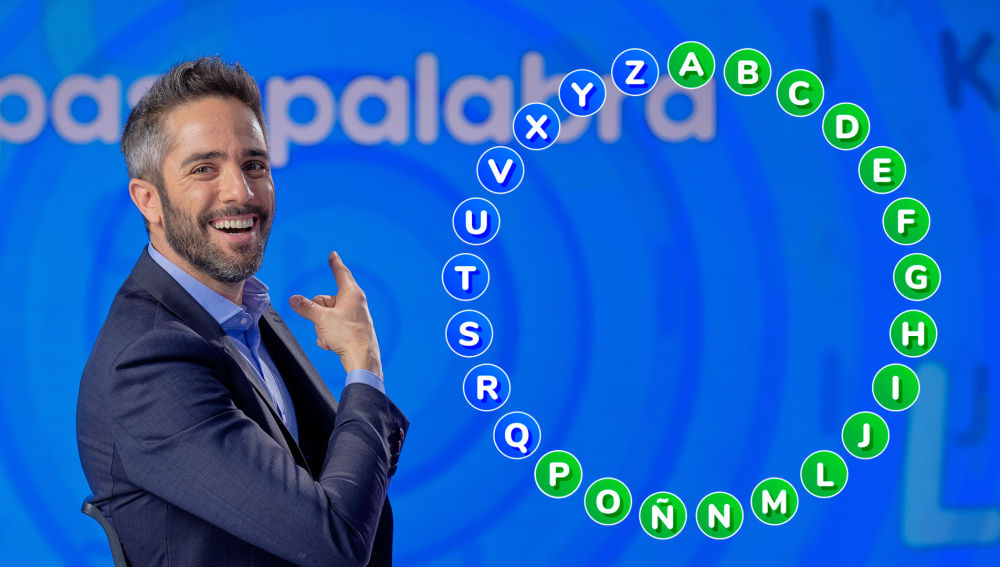
On 21 May 2026, the Civil Chamber of the Spanish Supreme Court brought to an end a battle that had been fought for years before Spanish and European courts. The question was deceptively simple: who owns El Rosco, the wheel of 25 letters that crowns each afternoon’s episode of the quiz show Pasapalabra?
The answer has been unequivocal: El Rosco is not a mere game idea, but rather an original work protected under the Spanish Intellectual Property Act, the ownership of which is vested in the Dutch production company MC&F Broadcasting Production and Distribution C.V., its authors being Reto Luigi Pianta and René Mauricio Loeb. Atresmedia must cease broadcasting the final round of the show as we know it and pay damages in the amount of EUR 50,000. Within hours of the ruling, Mediaset announced that it had already secured the acquisition of the rights.
Beyond the headline, this judgment offers highly valuable lessons for any business that lives by its ideas.
Idea or Work: Where the Line is Drawn
A classic dividing line runs through intellectual property law: ideas are not protected; only the specific form in which they are expressed enjoys protection, and then only where it is original. No one may register “the idea of staging a word-based quiz show”, but a specific way of doing so may indeed be protected, provided it features sufficiently developed structure, rules, aesthetics and mechanics.
The broadcasters argued that El Rosco amounted to a generic game mechanic. The opposing party contended that it was an autonomous creation with its own identity. The Supreme Court has come down clearly on one side: El Rosco is “a protected work, developed, structured and possessed of sufficient complexity”. It has precise rules, a recognisable graphic layout, a distinctive rhythm and an original combination of audiovisual elements. And because it is a work, it has authors; because it has authors, it has a rights holder; and because it has a rights holder, it cannot be exploited without a licence.
A Journey of Almost a Decade
The matter was not resolved in two hearings. In 2014, the Madrid Commercial Courts declared that the overall format belonged to ITV Studios and refused to recognise stand-alone protection for El Rosco. Between 2018 and 2023, the rights holders sought to bolster their position through trade mark protection, registering “El Rosco” as an EU trade mark; both the EUIPO and the General Court of the European Union cancelled the registration on grounds of bad faith. In 2022 came the turning point: the Provincial Court of Barcelona held that El Rosco did indeed qualify as a protected work. And on 21 May 2026 the Supreme Court has definitively confirmed that finding, dismissing in addition the plea of res judicata (the parties not being the same as in the earlier Mediaset-ITV litigation of 2019).
Three takeaways for our clients: an adverse decision at first instance is not the end of the road; the various avenues of protection are not interchangeable, and forcing one of them can prove costly (the trade mark cancellation for bad faith is highly instructive in this regard); and the doctrine of res judicata has clear limits.
Three Practical Takeaways
1. Document the creative process from day one. Who came up with the idea? Who developed it? When? The Supreme Court anchors its reasoning in the original authorship of Pianta and Loeb. Without traceability, there is no case.
2. Choose the right form of protection. Trade marks, patents, industrial designs, copyright and unfair competition law are distinct tools. Using one to make up for the shortcomings of another tends to end badly, and the EUIPO is unforgiving when it comes to bad faith.
3. Licences and assignments are as important as the asset itself. Atresmedia was exploiting El Rosco under a licence from ITV; the trouble was that ITV did not hold the rights to El Rosco. When a “global” licence is acquired, it is wise to look very closely at what, precisely, is included within its scope.
And Now, What?
Antena 3 must either redesign the final round or negotiate a licence with the new commercial rights holder. The judgment further warns that any programme reproducing a game based on this format will amount to an infringement: a mere change of name and set will not suffice.
For practitioners of intellectual and industrial property law, this is a leading precedent on the legal characterisation of audiovisual formats and, by extension, of any complex creation in which a parent idea coexists with satellite elements possessing their own identity. But, above all, it stands as a reminder of a truth we repeat day in, day out: good ideas, poorly protected, are worth less. And good ideas, properly protected, can be worth a great deal more than they appear to be at first glance.
At 1919 POLO | Attorneys at Law we advise companies and professionals on the protection, management and enforcement of their intangible assets. If you have a creative, technical or commercial asset that deserves to be protected — or a dispute on your desk — we would be delighted to review your case.