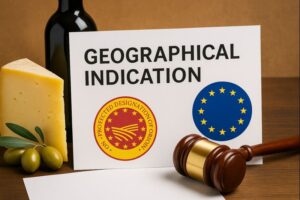
Since 1 December 2025, the European Union has launched a legal regime that redefines the protection of the cultural, productive and technical heritage of its territories. With the full entry into force of Regulation (EU) 2023/2411, Geographical Indications have expanded their scope and are no longer reserved exclusively for agri-food products, becoming a legal shield also for craft and traditional industry.
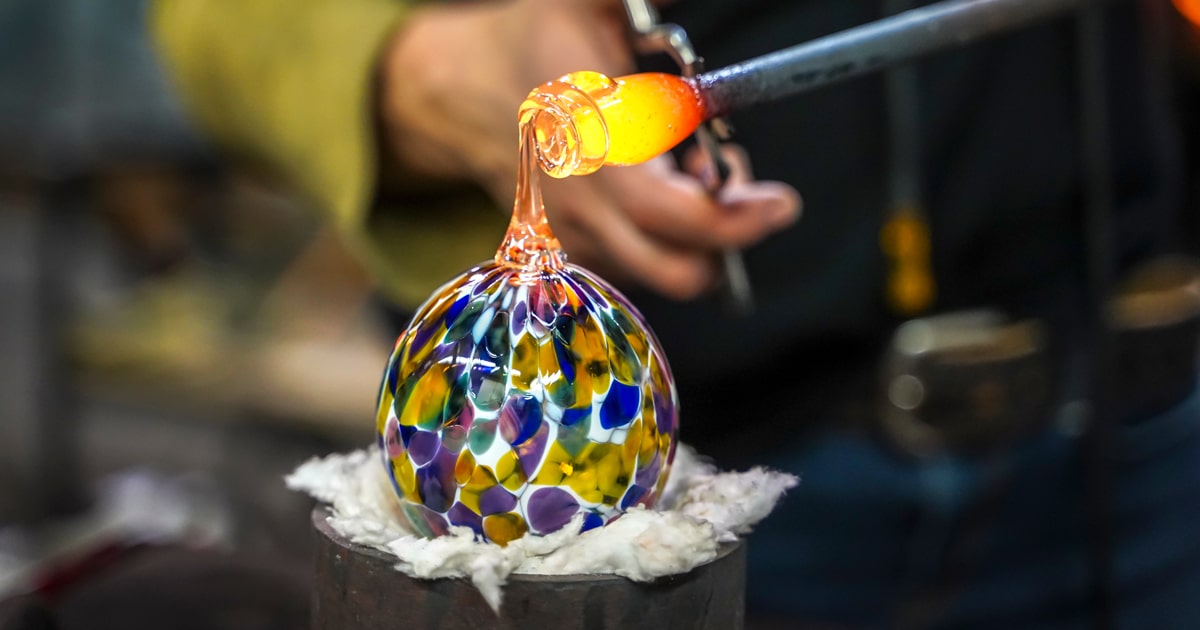
Europe now recognises that certain creations whose quality, technique and reputation have been refined over generations cannot be understood without reference to their territory. Ceramics with their own identity, glass blown using ancestral methods, cutlery forged with local mastery, or leatherwork crafted with historical processes now find a legal protection that transcends national borders.
Know-How as Protected Heritage
This new legal figure places know-how at the centre of analysis, and does so with the solemnity befitting those crafts that have survived the centuries thanks to their technical excellence and the cultural identity they embody. It is not merely a matter of protecting objects, but of guaranteeing the continuity of an intimate relationship between territory, tradition and reputation.
A Two-Stage Protection System
The system established by the European Union involves a two-stage examination: first national and then European, which certifies that the link between the product and its territory is not a mere commercial evocation, but a demonstrable reality. Following state verification, the European Union Intellectual Property Office (EUIPO) assumes responsibility for confirming the suitability of the application, subjecting it to rigorous scrutiny before entering it in the official register.
Cultural and Economic Impact
The significance of this regime lies not only in its administrative architecture, but in the transformation it promises for the craft and industrial sectors of Europe.
Conclusion: A Strategic Opportunity for Our Clients
The entry into force of the new European regime for Geographical Indications for craft and industrial products is not merely a legislative advance: it represents an unprecedented window of opportunity for the creative, manufacturing and territorial sectors. In a global market where authenticity has become an essential value, this legal figure makes it possible to protect what has for decades been difficult to safeguard: the prestige of origin, traditional know-how and the reputation accumulated over generations of producers.
For our clients — from craft associations to manufacturers with historical techniques, sectoral associations and local entities — this framework offers three immediate courses of action: identifying products eligible for protection, organising or strengthening collective producer structures, and defining a combined industrial property strategy that maximises legal protection.
In this scenario, our firm is in a position to provide decisive added value. We can accompany our clients throughout the entire process: from the preliminary feasibility analysis, through the technical drafting of the specification, the management before the national authorities, representation before EUIPO and, subsequently, defence of the sign against imitations or improper uses. We also offer advice on integrating the GI within a global brand strategy, reinforcing competitiveness and expanding the presence of products in international markets.
Europe has taken a firm step to dignify tradition and legally recognise the singularity of the authentic. It now falls to producers and rights holders to take advantage of this renewed framework. And our commitment is clear: to accompany them with technical precision, strategic vision and the experience necessary to turn this new regulation into a real and sustainable advantage for their business.